Inside the Data Streams Connecting Baseball At-Bats to Horse Finishes and Blackjack Hands on Betting Apps
Written by Iris Brooks · Jun 15, 2026
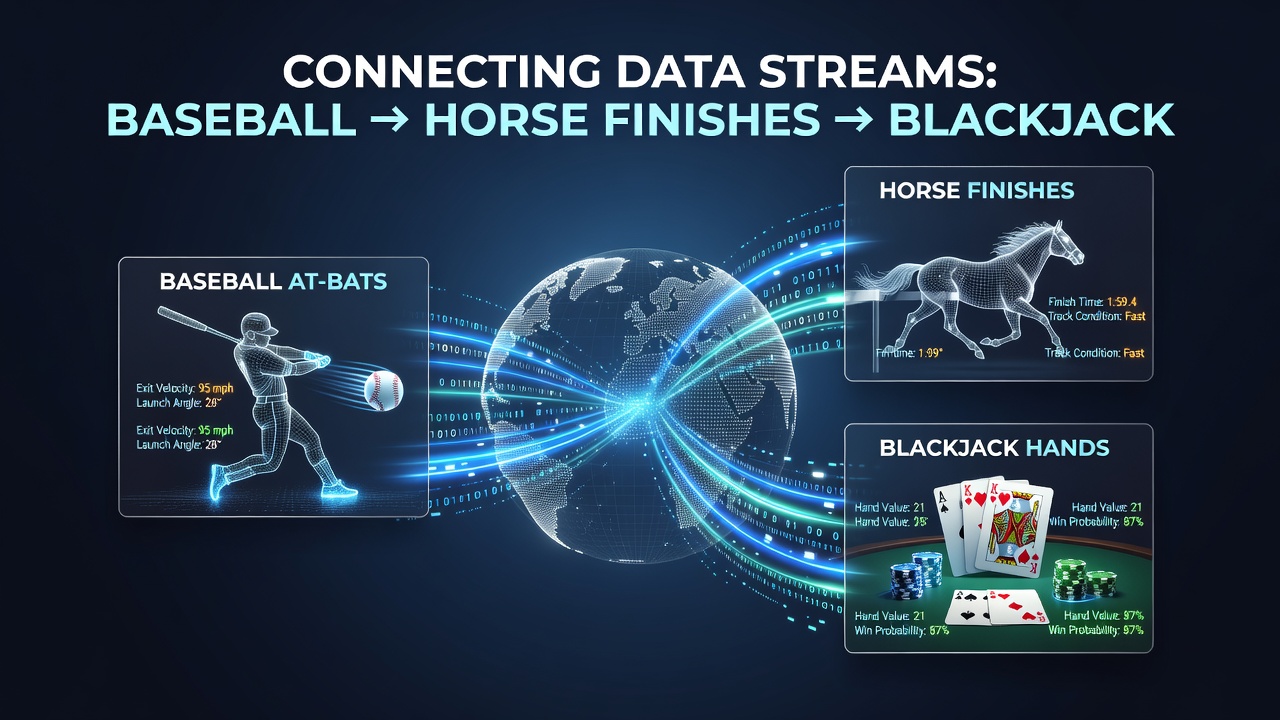
Inside the Data Streams Connecting Baseball At-Bats to Horse Finishes and Blackjack Hands on Betting Apps
Betting applications now process continuous data feeds that link baseball at-bats, horse racing finishes, and blackjack hands within unified user sessions, and these connections rely on standardized APIs that transmit event timestamps, probability updates, and account balances across verticals. Platforms synchronize live MLB pitch data with racetrack results from multiple jurisdictions while simultaneously adjusting blackjack shoe compositions for users who switch between sports and table games during the same login period.
Real-Time Data Pipelines Across Sports and Casino Products
Baseball at-bats generate granular metrics such as exit velocity, launch angle, and pitch location that feed directly into live odds engines, yet these same pipelines carry horse finish data from tracks in the United States, Canada, and Australia where fractional-second timing determines payouts. Operators route both datasets through central servers that also manage blackjack hand histories, allowing the system to correlate user activity patterns across categories without requiring separate authentication steps.
Research from the Canadian Gaming Association shows that multi-vertical platforms recorded higher session durations when baseball and racing data streams shared the same backend infrastructure as casino tables. Data synchronization occurs every few seconds during peak evening hours, which aligns with typical MLB game schedules and evening thoroughbred and harness meets in multiple time zones.
Cross-Vertical User Behavior in June 2026
During June 2026 observers noted increased crossover activity on major applications where users placed baseball player props in one tab while monitoring horse race results in another, then transitioned to blackjack sessions that used accumulated loyalty points from both prior activities. The underlying architecture treats each at-bat, each race finish, and each dealt hand as discrete events that update a shared user profile in real time, and this profile drives personalized odds adjustments and bonus triggers.
Application developers maintain separate data schemas for sports, racing, and table games yet merge them at the account layer, which permits instant balance transfers and unified responsible gambling limits. Figures from state regulatory filings indicate that platforms operating in multiple U.S. jurisdictions processed over 40 percent of June 2026 handle through accounts active in at least two verticals simultaneously.
Technical Standards and Latency Management
Low-latency requirements differ across products: baseball demands sub-second updates for pitch-by-pitch wagering, horse racing needs precise finish-line timing accurate to milliseconds, and blackjack requires immediate card-deal confirmation. Unified platforms address these varying demands through edge computing nodes positioned near major data sources, including stadiums, racetracks, and licensed casino floors, which reduces transmission delays while maintaining consistent account states.
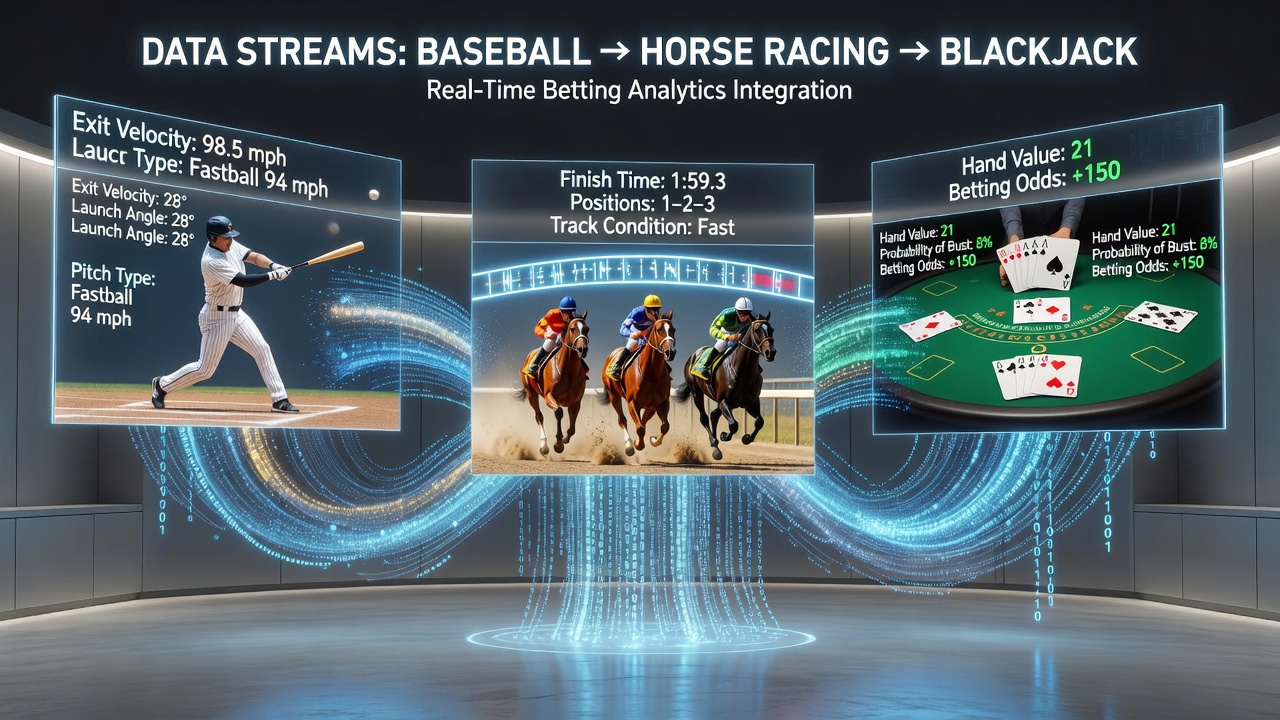
Industry reports compiled by the Australian Gambling Research Centre document how operators adopted common event identifiers that allow a single user action in one product to influence available options in another. For instance, a successful baseball prop bet can unlock enhanced blackjack payout tables or improved horse racing place odds within the same application session, and these linkages depend on secure data handoffs that comply with each jurisdiction's reporting rules.
Regulatory Oversight and Data Sharing Requirements
State gaming boards in the United States require operators to maintain auditable logs that separate sports, racing, and casino transactions even when presented through a single interface, and these logs feed into tax calculations that differ by product category. International operators active in multiple markets align their data architectures with frameworks from bodies such as the Nevada Gaming Control Board and equivalent Canadian provincial regulators, which ensures consistent handling of cross-product activity.
Security protocols encrypt each data stream independently before merging at the user-account level, and penetration testing occurs regularly to verify that baseball, horse racing, and blackjack information remains isolated until intentional user-driven correlation occurs. Compliance teams review these merged datasets monthly to confirm adherence to advertising standards and age-verification mandates that apply uniformly across verticals.
Conclusion
Data streams that once operated in isolation now converge inside betting applications, enabling seamless movement between baseball at-bats, horse finishes, and blackjack hands while preserving product-specific regulatory controls. Continued technical refinements in latency reduction and cross-jurisdictional reporting support further integration without compromising the distinct operational requirements of each vertical.